Bringing plants indoors transforms a house into a living space, quite literally. Whether you’re a seasoned gardener or someone who’s killed every succulent gifted to you, there’s a plant that fits your lifestyle and skill level. The best indoor plants balance aesthetics with resilience, thriving in your actual home conditions, not just the ones your neighbor claims to have. In 2026, plant parenthood isn’t about perfection: it’s about finding greenery that works with your schedule, light, and design preferences. This guide breaks down the most practical picks, from low-maintenance workhorses to air-cleaning powerhouses and statement-makers for modern interiors.
Table of Contents
ToggleKey Takeaways
- The best indoor plants combine resilience with aesthetics, matching your home’s actual light conditions and your schedule rather than ideal gardening scenarios.
- Low-maintenance workhorses like Snake Plants, ZZ Plants, and Pothos thrive on neglect and irregular watering, making them perfect for busy homeowners.
- Air-purifying indoor plants such as Peace Lilies, Spider Plants, and Philodendrons actively remove toxins like formaldehyde and improve indoor air quality when grouped in clusters.
- Modern design-forward plants like Monstera Deliciosa and Calathea showcase striking foliage and elevate interior spaces when paired with appropriate pots and varied heights.
- Overwatering is the leading cause of plant death; check soil moisture with the one-inch finger test before watering, and always use pots with drainage holes.
- Start with one resilient variety like a Snake Plant or Pothos to learn proper care basics, then gradually expand your indoor garden as your confidence grows.
Low-Maintenance Plants Perfect for Busy Homeowners
Not everyone has time to fuss over plants. That’s where true workhorses come in. The Snake Plant (Sansevieria) is nearly indestructible, it tolerates low light, irregular watering, and temperature swings. You can genuinely forget about it for weeks and it’ll be fine. Similarly, ZZ Plants handle neglect with grace, featuring glossy leaflets and upright growth that adds structure to any room.
Pothos vines drape beautifully over shelves or climb a trellis, adapting to whatever light you have. They’re nearly impossible to kill and actually prefer drying out between waterings. Dracaena varieties (like the corn plant or lucky bamboo) grow tall with minimal intervention and fit snugly in corners or beside furniture. For something with a bit more presence, consider Rubber Plants, they’re forgiving once established and deliver dramatic, dark foliage that commands attention.
The key with these plants is matching them to your space’s light level and not overwatering. Most low-maintenance plants actually prefer to dry out: soggy soil kills them faster than neglect. Place them near a window (though many tolerate artificial light), water every 2–3 weeks, and you’re done. Those dealing with especially tight schedules might also explore succulents, which store water and laugh at irregular watering schedules.
Air-Purifying Plants That Boost Indoor Health
Indoor air quality matters. While no plant is a substitute for proper ventilation or air filters, certain plants genuinely remove toxins like formaldehyde, benzene, and xylene, compounds found in paint, cleaning products, and furniture finishes.
Peace Lilies are champions here. They droop visibly when thirsty (solving the guessing game), produce elegant white spathes, and actively filter formaldehyde and ammonia. Boston Ferns excel at humidifying and purifying but need more consistent moisture and humidity than other picks. Spider Plants are nearly as tough as Snake Plants yet produce oxygen and remove formaldehyde: they also dangle babies (plantlets) that propagate effortlessly. Philodendrons clean air while trailing gracefully, making them perfect for hanging baskets or high shelves.
Research from institutions like NASA has documented which houseplants reduce indoor air pollutants most effectively. If your home smells stale, has recently been painted, or contains new furniture off-gassing, clustering 3–5 of these plants throughout your living areas creates a noticeable difference. Start with house plants that flower or trailing varieties like Philodendrons if you want both function and visual interest. Many air-purifying plants also work in lower light, making them versatile for bedrooms, offices, or dim living rooms.
Stylish Plants for Modern Interior Design
Interior design conversations about plants have moved beyond “green thing in corner.” Today’s homowners want plants that complement their aesthetic, whether that’s minimalist Scandinavian, warm industrial, or eclectic bohemian.
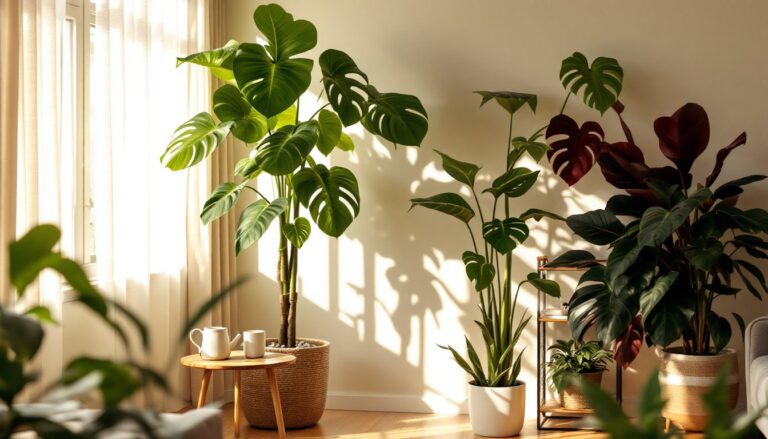
Monstera Deliciosa (Swiss Cheese Plant) dominates modern decor right now. Its large, perforated leaves are architectural and photograph well: it grows as a trailing or climbing vine depending on your setup. Fiddle Leaf Figs deliver drama with huge, violin-shaped foliage: they demand bright, indirect light and consistent care but look stunning in empty corners or beside windows.
Calathea varieties showcase striking patterns, emerald, white, and burgundy stripes or dots, making them living art. They’re pickier than workhorses but reward attention with showstopping foliage. Pilea Peperomioides (Chinese Money Plant) has become a design staple with its coin-shaped leaves and neat, architectural growth. For statement-makers, large indoor plants like Rubber Plants, Bird of Paradise, or Alocasias command space and anchor a room.
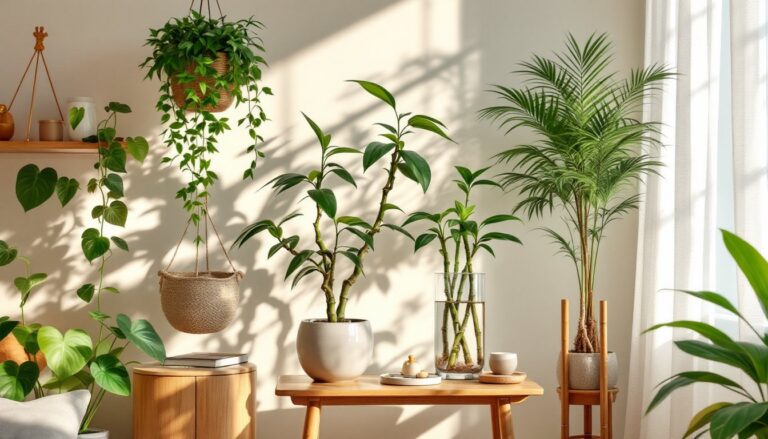
Pairing plants with the right pot matters too. A sleek ceramic container, macramé hanger, or minimalist stand elevates the whole look. Group odd numbers of plants at varying heights: it feels intentional rather than scattered. Light-colored walls showcase foliage better than dark ones, and trailing plants soften hard furniture edges beautifully.
Easy Plant Care Tips for First-Time Plant Parents
Watering and Light Requirements
The number-one killer of indoor plants is overwatering. Most houseplants prefer drying out somewhat between waterings, think of it like a natural rainfall cycle. Before watering, stick your finger 1 inch into the soil: if it feels dry, water thoroughly until it drains from the bottom. If it’s still moist, wait a few more days. During winter, plants need less water: in summer, more.
Light is trickier because “bright, indirect light” means different things in different homes. East- or west-facing windows offer gentle morning or afternoon sun without harsh midday rays. North-facing windows provide dim, consistent light, fine for Pothos, ZZ Plants, and low-light tolerant varieties. South-facing windows deliver the strongest light, ideal for Succulents, Cacti, and sun-loving bloomers. If you’re in a dim space, move plants closer to windows or try grow lights (affordable LED strips work great).
Temperature consistency also helps. Most tropical houseplants enjoy 65–75°F during the day and slightly cooler nights. Avoid drafts from heating vents or cold windows in winter. Humidity matters for some plants (Ferns, Calathea) but not others (Succulents, Snake Plants). If your air feels dry, group plants together or place a humidifier nearby.
Common Mistakes to Avoid
Wrong pot size: A pot much larger than the root ball stays too wet. Use a container only 1–2 inches larger in diameter than the previous one. Ensure drainage holes exist: they’re non-negotiable.
Ignoring drainage: Sitting water rots roots. Always use pots with drainage holes and empty saucers after watering.
Moving plants constantly: Plants adjust to light over weeks. Shuffling them around stresses them. Pick a spot and stick with it for at least a month before deciding it’s not working.
Over-fertilizing: More nutrients aren’t better. Fertilize during growing season (spring and summer) every 4–6 weeks using a balanced, diluted houseplant formula. Skip it in fall and winter when growth slows.
Forgetting pests exist: Spider mites and mealybugs love indoor plants. Check undersides of leaves monthly. If you spot sticky residue, webbing, or tiny bugs, isolate the plant and treat with insecticidal soap or neem oil. Studies from horticultural resources like The Spruce provide detailed pest-management guides tailored to specific plants.
Assuming one light level works for all plants: A Pothos thrives in low light: a Succulent sulks. Match the plant to your actual conditions, not the other way around. According to 10 easy-care plants guides, pairing forgiving species with low-light rooms prevents most beginner failures. Also, comprehensive plant care resources recommend starting with 2–3 resilient varieties before branching into pickier specimens.
Conclusion
The best indoor plants for your home are the ones you’ll actually keep alive, ones that match your light, your schedule, and your design taste. Start with a single low-maintenance pick like a Snake Plant or Pothos, learn its rhythm, then expand. There’s no shame in killing plants while learning: every gardener has been there. Your space and your plants will evolve together, and before long, you’ll have a thriving indoor garden that feels as natural as it looks.