When most people picture houseplants, they imagine bright green leaves catching the light. But there’s a growing trend that flips that script entirely: black plants indoor are having a major moment. These dramatic varieties with deep, near-black foliage add instant sophistication and visual contrast to any room. Whether you’re aiming for moody elegance, a modern aesthetic, or just want something that stands out from the typical green monotony, black-leaved plants deliver serious design impact. The good news? Many of these striking plants aren’t fussy, they’re as practical as they are gorgeous. Let’s explore what makes them special and how to bring them home.
Table of Contents
ToggleKey Takeaways
- Black plants indoor add dramatic visual contrast and sophistication to any room, serving as instant focal points that elevate interior design far beyond typical green foliage.
- Black Elephant Ear (Alocasia) and Black Velvet Aroid (Scindapsus) are the top varieties for indoor spaces, with Alocasia demanding more humidity and care, while Scindapsus thrives in lower light and is more forgiving for beginners.
- Bright, indirect light is essential for black plants—direct afternoon sun can scorch dark leaves, so position them a few feet away from south or west-facing windows or use sheer curtains for filtering.
- Well-draining soil, proper watering (only when the top inch of soil is dry), and humidity management (ideally 50% or higher) prevent root rot and keep dark foliage vibrant and healthy.
- Style black plants as intentional statement pieces by pairing them with neutral pots and light-colored companion plants, positioning them against white walls or with brass accents for maximum visual impact.
Why Black Plants Make a Bold Design Statement
Dark foliage creates contrast that light green or variegated plants simply can’t match. In a room full of typical houseplants, a black-leaved variety immediately becomes a focal point, it’s the equivalent of wearing a black blazer in a room full of pastels. That visual weight matters in interior design.
Black plants also blur the line between indoors and gardens. They feel sophisticated and curated, like you’ve sourced something special from a high-end nursery rather than grabbing whatever’s on the grocery store shelf. That’s partly because they’re less common, so they carry a subtle sense of exclusivity.
From a practical standpoint, dark foliage hides dust better than light leaves, so they look cleaner longer between waterings. They also pair beautifully with minimalist, industrial, or contemporary interiors, and they work surprisingly well in bohemian or eclectic spaces, too. Large indoor plants with bold coloring can anchor an entire room’s design scheme.
Best Black Plant Varieties for Indoor Spaces
Not all dark plants are created equal. Some are genuinely jet-black, while others trend toward deep burgundy or charcoal. Here are the standouts that actually thrive indoors.
Black Elephant Ear and Alocasia
The Black Elephant Ear (Alocasia varieties, especially ‘Black Velvet’ or ‘Raven’) is the celebrity of dark foliage. These plants sport velvety, nearly black leaves with striking white or silver veins running through them. The contrast is almost iridescent in the right light.
Alocasias are medium-effort plants that reward attention. They like humidity, ideally 50% or higher, and prefer indirect, bright light (think a few feet back from a north or east-facing window). They’re not a “set it and forget it” plant, but they’re not impossible either. In winter, they may go dormant, which is totally normal. Water when the top inch of soil dries out, but don’t let them sit in soggy soil. They hate wet feet.
These plants grow fairly quickly if conditions are right, reaching 2 to 4 feet tall indoors, so plan for vertical space. House plants for beginners might find Alocasias a step up in care, but experienced growers love them for the payoff.
Black Velvet Aroid and Scindapsus
The Black Velvet Aroid (Scindapsus pictus ‘Black Velvet’) is technically different from Alocasia but delivers similar visual drama on a smaller scale. It’s a vining plant with deep, near-black leaves and bright white spots, almost like someone flicked paint across them.
Scindapsus is more forgiving than Alocasia. It tolerates lower light and doesn’t demand high humidity (though it appreciates it). Let the soil dry out a bit between waterings: overwatering is the quickest way to trigger root rot. This is a great trailing plant for shelves, hanging baskets, or to climb up a moss pole. It’s also slower-growing, so if you want drama without a plant that doubles in size each season, this is your pick.
Both varieties benefit from occasional misting and occasional wiping of the leaves to keep them glossy. Think of it like washing a car, it doesn’t hurt the plant, and it keeps it looking sharp. For those exploring good house plants for low light, Scindapsus is especially adaptable.
Care Tips for Black Foliage Plants Indoors
Black plants often come from tropical understories, which means they evolved in filtered, dappled light. That translates to indoor care: bright, indirect light is their sweet spot.
Direct afternoon sun through a window can actually scorch dark leaves, turning them brown or faded. A sheer curtain or placing the plant a few feet away from south or west-facing windows prevents this. East or north-facing windows usually work beautifully without any filtering.
Soil drainage is non-negotiable. Use a potting mix that’s loose and airy, not dense, compacted potting soil. Many growers blend standard houseplant mix with perlite or orchid bark to improve drainage. Root rot is the silent killer of tropical plants, and it starts with water sitting around the roots.
Water when the top inch or two of soil is dry to the touch. This varies by season, pot size, and humidity, so check regularly instead of watering on a schedule. Winter growth slows for most plants, so you’ll water less frequently.
Humidity is important but not impossible to manage. If your air is very dry (below 40%), group plants together, mist them lightly, or set the pot on a pebble tray filled with water (the pot sits above the water, not in it).
Feed during the growing season (spring and summer) with a diluted liquid houseplant fertilizer every 2-3 weeks. In fall and winter, cut back or stop feeding entirely. Large house plants low light often struggle more in dim, dry conditions, so be especially attentive to humidity if your space is darker.
Rotate your plant every few weeks so all sides get light, otherwise, it’ll lean toward the window and grow unevenly. Dust or wipe leaves monthly to keep them from getting dingy.
Styling Black Plants in Your Home Décor
The real magic of black plants happens when you style them intentionally. They’re statement pieces, so treat them that way.
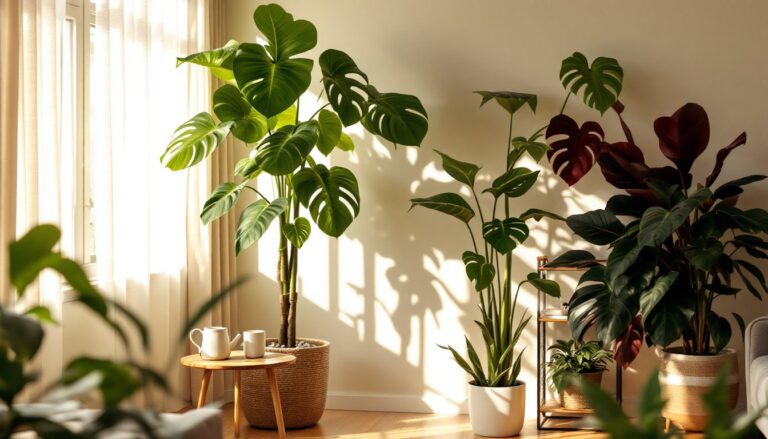
A single large Black Elephant Ear on the floor in a corner catches the eye the moment you enter a room. Pair it with a neutral, minimalist pot (white ceramic, natural wood, or concrete) to let the foliage be the star. Avoid busy patterns or competing colors.
If you’re building a collection, group black plants with lighter foliage, like pothos, philodendron, or even pale succulents, to create depth and balance. The contrast makes both the light and dark plants pop. This approach works in shelving, on plant stands, or windowsills.
Black plants are especially stunning against white walls, light-colored furniture, or in rooms with brass or copper accents. The metal plays beautifully with the dark leaves. They also integrate seamlessly into modern farmhouse aesthetics, industrial lofts, or moody, eclectic spaces.
For smaller spaces, a trailing Black Velvet Aroid on a high shelf adds drama without taking up floor real estate. It’s also more forgiving and faster to acquire than hunting down a massive mature Black Elephant Ear.
Remember: these plants are investments in your space. Choose a spot where you’ll enjoy them daily, and make sure it meets their light requirements. A black plant stuck in a dark corner where it slowly declines doesn’t help anyone. If you’re still building your plant collection, easiest house plants to keep alive like pothos or snake plants can fill gaps while you master the care for more demanding varieties.
Conclusion
Black plants indoor are more than a trend, they’re a practical way to add sophistication, depth, and personality to your home. Whether you go for the dramatic Black Elephant Ear or the more compact Black Velvet Aroid, these varieties deliver visual impact while rewarding thoughtful care. Start with one, place it where you’ll notice it, and let it transform how you think about houseplant styling. The payoff is worth the attention.